

Image Source: Internet
As we successfully launched a Malaysia Grouped Project for methane capture from industrial wastewater, we are now expanding our efforts in Indonesia, continuing our mission to enhance sustainability in the agricultural sector. We plan to register the Grouped Project in Indonesia by March 2025.
The Grouped Project is open for other biogas plants that meet the defined eligibility criteria to join during regular verifications. It offers Project Owners a faster, simpler, and more cost-effective way to register smaller projects for carbon credits, making it easier to access the growing carbon market.
This page is updated as details on the implementation of the Grouped Project become available.
1. The Grouped Project Description
Importance of Methane Reduction
Methane emissions are a particularly important greenhouse gas (GHG), as methane is 28 times more potent than carbon dioxide. Reducing emissions from methane has become a global priority: the Global Methane Pledge initiative was launched at COP26, aiming to abate anthropogenic methane emissions by at least 30% by 2030.
Reducing emissions from methane is also a priority in Indonesia, where methane accounts for about 33.7% of total emissions of greenhouse gases.
In Indonesia, agriculture is a significant contributor to emissions, particularly from crop processing like oil palm, sugar cane, and cassava. A key issue is the large volume of wastewater generated, which is rich in nutrients and organic matter.
The common practice is to store and treat this wastewater in open ponds. However, as the organic matter decomposes, it produces methane, a potent greenhouse gas that escapes into the atmosphere, contributing heavily to emissions.
Initiative and Impact of the Grouped Project
There is a better but more costly solution to this problem. By introducing of a sequential stage of wastewater treatment with biogas recovery and combustion, the methane can be captured and processed into biogas for further uses such as generating renewable energy.

While the capture and destruction of methane is recognised as one of the fastest ways to address near-term climate change and will be a prerequisite for reaching the 1.5 °C target, individual biogas plants would normally be too small and inefficient to function as carbon credit projects. Individual biogas plants are practically ‘locked out’ from climate financing, due to their small size and high complexity.
In contrast, the Grouped Project standardises the approach and significantly improves the efficiency of issuing carbon credits for biogas plants. Participating sites (“Project Activity Instances”) are rewarded with the issuance of carbon credits, based on verified data that shows the capture and destruction of methane.
When approached in this way, carbon credits become an effective incentive for companies to go over and above their legal requirements, and accelerate climate action on this important source of emissions.
2. The Growth of the Grouped Project
The Development of the Grouped Project Itself
The Grouped Project was developed in partnership with PT Intan Sejati Andalan over a multi-year period. The first Project Activity Instance (PAI1) is the PT Intan Sejati Andalan Biogas Plant, which is expected to start operations in October – November 2024.
Grouped Project Development under the Carbon Standard
All emissions reductions achieved by the Grouped Project are verifiable and permanent.
We’re commencing with one first Biogas plant in Dumai, Riau Province, Indonesia and intend to add further new biogas plants into the Group over the next few years. The Grouped Project is planned to be registered by March 2025.

Further updates on the development of the Grouped Project will be provided in due course.
3. The Contributions of the Grouped Project
Benefits of the Grouped Project
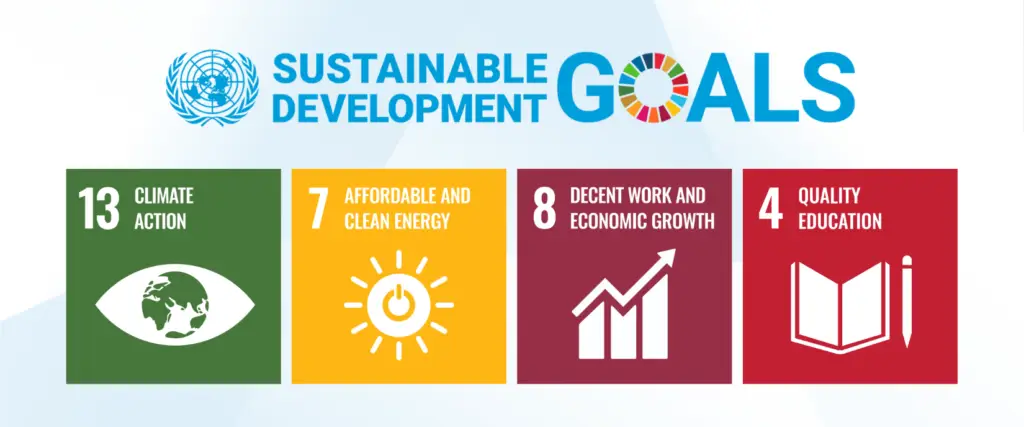
The Grouped Project contributes to UN Sustainable Development Goal 13 “Climate Action”, by the reduction of emissions. As the Grouped Project matures, we expect it to reduce emissions by several hundred thousand tonnes of carbon dioxide equivalent every year for the life of the Grouped Project.
The Grouped Project also makes contributions to SDG 7 “Affordable and Clean Energy”, SDG 8 “Decent Work and Economic Growth” and SDG 4 “Quality Education”.
Safeguards of the Grouped Project
Stakeholders Engagement
Biogas plants are classified as low risk pieces of infrastructure in Indonesia. Each Project Activity Instance meets all relevant legal requirements. Project Owners implement training courses, have prepared emergency and response measures for their sites, and document incidents.
PAIs are typically located in areas of few stakeholders and Indonesia has also deemed biogas plants to be of low potential impact on the Environment and Society.
Environmental Regulations
- Agriculture Sector: Minister of Agriculture, Regulation No. 38 of 2020 on Indonesian Sustainable Palm Oil (ISPO) Plantation Certification
- Air Quality: Minister of Environment and Forestry, Regulation No. 41 of 1999 on Air Pollution Control
- Water Quality: Government Regulation No. 82 of 2001 on Management of Water Quality and Control Over Water Pollution; and Minister of Environment, Regulation No. 05 of 2014, Appendix III on Wastewater Quality Standards for Palm Oil Industry
Labour Rights
Worker rights follow International Labour Organization (ILO) Conventions Ratified by Indonesia and local Indonesian employment law, including the following:
- Forced Labour Convention, 1930
- Freedom of Association and Protection of the Right to Organise Convention, 1948
- Right to Organise and Collective Bargaining Convention, 1949
- Equal Remuneration Convention, 1951
- Abolition of Forced Labour Convention, 1957
- Discrimination (Employment and Occupation) Convention, 1958
- Minimum Age Convention, 1973
- Worst Forms of Child Labour Convention, 1999
- Promotional Framework for Occupational Safety and Health Convention, 2006
4. Monitoring and Verification
The Verification Process
The monitoring shall be carried out strictly following the designed Monitoring Plan and this will be verified by an external party, known as the validation/verification bodies (VVBs). The VVBs will verify the monitoring plan and procedures to ensure all requirements have been met before submission for the issuance of Carbon Credits.
The Grouped Project intends to verify and issue 25,000 – 50,000 credits annually.
Basic Monitoring Requirements
In order to claim for Carbon Credits, a series of monitoring must be carried out according to the VCS monitoring requirements. Monsoon defined a detailed Monitoring Plan for the Grouped Project is designed to suit the PAI needs and adhere to the requirements of the applicable methodology and tools.
It is important to adhere strictly to the monitoring plan to avoid losing carbon credits due to lack of documentation.
5. Feedback
Feedback for the Grouped Project
Feedback on the Grouped Project is welcomed via email to Monsoon Carbon. For any further questions about the Grouped Project, please feel free to contact Monsoon Carbon at [email protected] or by using the form below.
Feedback for Individual Project Activity Instances
Each Project Activity Instance also maintains a process for the submission and resolution of site-specific issues from stakeholders. Please contact each site directly should an issue arise. This information is reported back to Monsoon Carbon and included in our routine monitoring reports to VCS.
Site specific contacts are provided below:
| Project Activity Instance | Operator | Details |
| PT Intan Sejati Andalan Biogas Plant | PT Intan Sejati Andalan | Feedback can be submitted to: • Name: (Pak) Darwin Alamsyah • Position: Biogas Plant Manager • Address: Duri XIII Street, Bathin Sobanga Village, Bathin Solapan, Bengkalis District, Riau Province, North Sumantra, Indonesia • Phone: (+62) 823-8730-1943 • E-mail: [email protected] • Online Grievance form at: https://drive.google.com/file/d/1oYAc_9qUoMzOWoFF7eGkVrnn7K9Do5SE/view Please note the feedback is applicable to PT Intan Sejati Andalan Biogas Plant. |


 WhatsApp
 Zalo
Zalo
