
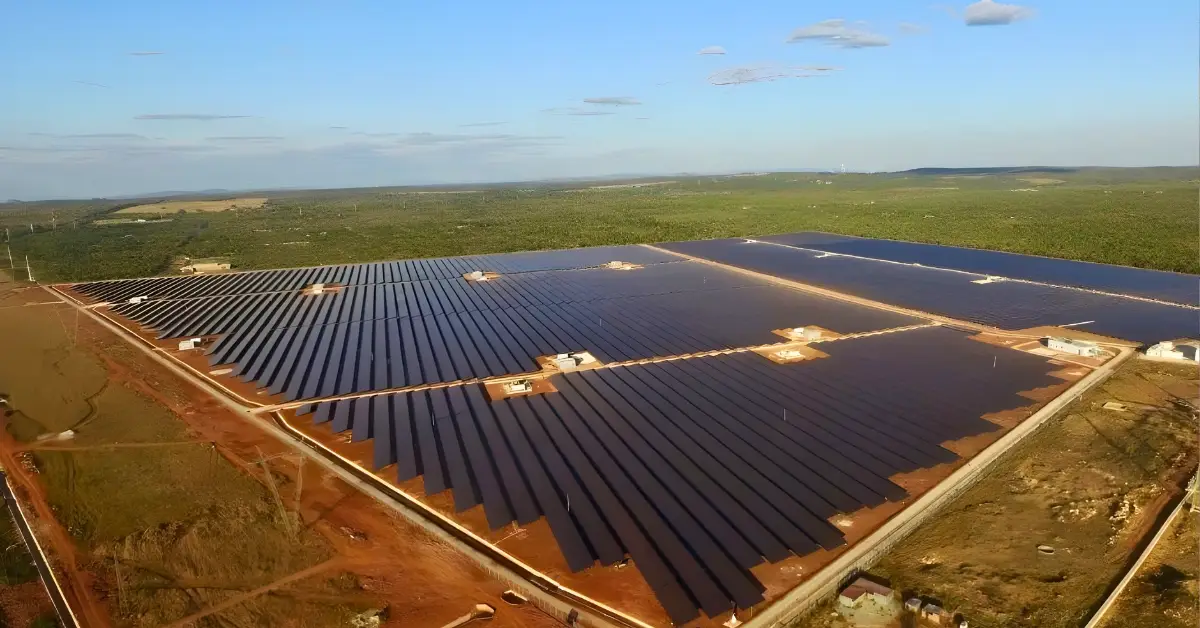
Monsoon Carbon is pleased to announce the registration of the Bangweulu Solar Power Plant in Zambia under the International Tracking Standard Foundation (formerly the I-REC Standard). This is the first-ever solar project in Zambia registered for I-REC issuance.
The availability of I-RECs from this solar power plant provides Zambian and international buyers with a new option to purchase credible, verified solar Renewable Energy Certificates (RECs) – a preferred alternative to conventional grid power and fossil fuels.
The registration continues Monsoon’s mission to make I-REC supply available across emerging markets, adding to our existing network across other 21 countries.
Bangweulu Solar Power Plant
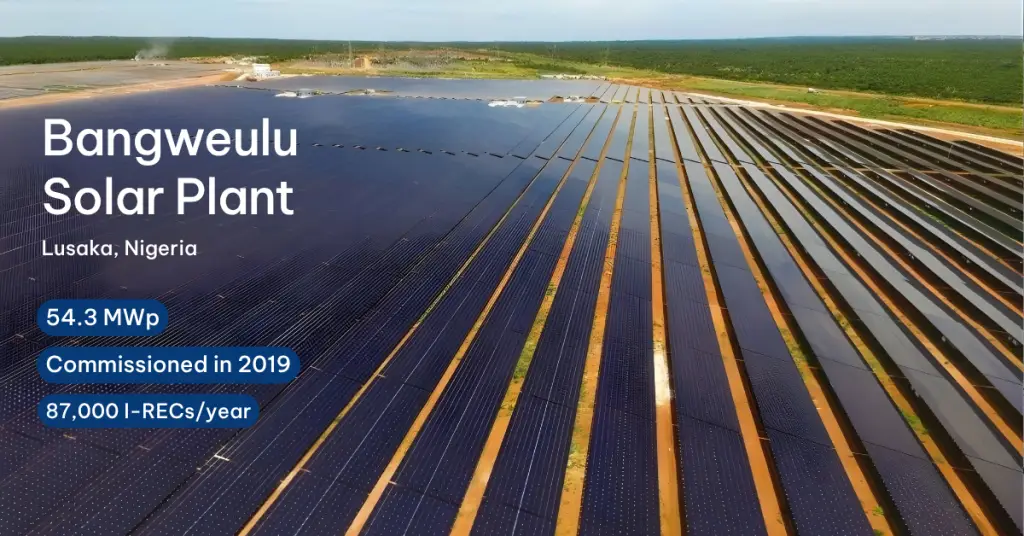
Bangweulu Solar Power Plant is a 54.3 MWp ground-mounted solar PV project located in the Lusaka South Multi-Facility Economic Zone (MFEZ), Kafue District, Lusaka Province.
Commissioned on 11 March 2019, Bangweulu was Zambia’s first utility-scale solar plant, developed under the World Bank Group’s Scaling Solar programme. It supplies approximately 87,000 MWh of renewable electricity to the ZESCO national grid each year, which is enough to meet the electricity needs of around 82,500 households and displaces roughly 35,000 tCO2e annually.
The average annual issuance is expected to be 87,000 I-RECs.
AXIAN Energy
AXIAN Energy is the owner of the Bangweulu Solar Power Plant. Part of the pan-African AXIAN Group, AXIAN Energy develops, invests in and operates renewable energy projects across Africa, with more than 300 MW of installed capacity in operation across nine countries. Its stated ambition is to reach 2 GW of installed renewable capacity by 2030, supporting the transition towards more reliable, affordable and sustainable energy across the continent.
Benefits of This I-REC Project
Drive Zambia’s Renewable Energy Diversification
Hydropower has long been the backbone of Zambia’s electricity system, accounting for more than 80% of national generation. However, this heavy reliance on rainfall-dependent hydropower leaves the country vulnerable to seasonal variability and climate-related disruptions, highlighting the need for a more diversified generation mix.
Solar power can play an important complementary role, with stronger output during the dry season and relatively short development timelines. Bangweulu Solar supports this transition by adding significant solar capacity to Zambia’s grid, helping strengthen energy security, resilience, and the country’s move towards a cleaner and more balanced energy mix.
Support Zambia’s Energy and Climate Goals
Under its National Energy Compact, Zambia aims to reach 10,000 MW of generation capacity by 2030, including 3,000 MW of solar, and to grow the non-hydro renewable share of its generation mix from 3% to 33%. The country is also targeting universal electricity access by 2030, from roughly half the population today.
Bangweulu contributes to that trajectory while avoiding approximately 35,000 tonnes of CO2e per year.
Empower Rural Community Development
Since 2019, the project has been a social pillar for the rural communities of Zone 10 of the Lusaka South MFEZ through its Livelihoods Upliftment (LIVE-UP) programme, delivered with Total LandCare. The programme covers three areas:
- Food and nutrition security: supporting 500 rural households around the site, measured against household hunger and dietary scores.
- Income and livelihoods: helping households diversify their incomes and build productive assets such as livestock, farm equipment and improved housing.
- Climate resilience and local employment: promoting climate-smart farming for smallholders, alongside local jobs created in construction and ongoing plant operations.
Bangweulu Solar contributes to SDG 4 “Quality Education”, SDG 7 “Affordable and Clean Energy”, SDG 8 “Decent Work and Economic Growth” and SDG 13 “Climate Action”.
Companies in Zambia Can Now Purchase Solar I-RECs!
The Bangweulu Solar Project is now generating solar electricity and the solar I-RECs are available for purchase. I-RECs enable companies with operations in Zambia to switch to using electricity from renewable sources, reduce Scope 2 emissions, and demonstrate credible climate action.
- Eligibility for RE100 and SBTi. Commissioned in 2019, the plant falls within the facility age window under carbon reporting initiatives like RE100 and SBTi.
- A Large Volume of RECs: The total average annual issuance from the two projects is 87,000 I-RECs.
- Spot and forward orders. Monsoon offers I-RECs from this project on a spot basis or under forward contracts for companies with multi-year targets.
For the further explanation of purchasing RECs in Zambia, see How to Buy I-RECs in Zambia.
About RECs
A REC is evidence that a unit of electricity was generated from a renewable source. RECs are issued and purchased on the basis that one certificate represents one megawatt hour of renewable electricity.
These certificates are purchased and redeemed to reduce a company’s Scope 2 emissions. Outside of the EU and the US, the most common standard for RECs is the International Attribute Tracking Standard (formerly the I-REC Standard).
Purchasing I-RECs is a cost-effective way to reduce a company’s carbon footprint. For the owners of renewable energy projects, I-RECs reward a project for the environmental attributes of the power they generate. This incentivises the replacement of non-renewable power and supports the transition to clean, renewable national grids.
You can read more about RECs here, or use the contact form below to get in touch with us about I-RECs in Zambia.


 WhatsApp
 Zalo
Zalo
