

Monsoon Carbon has registered a new solar power project in Nepal under the International Tracking Standard (formerly the I-REC Standard). This is the largest utility-scale solar power project in Nepal, and the first-ever solar project in Nepal registered for I-REC issuance.
The availability of I-RECs from this solar power plant provides Nepalese and international buyers with a new option to purchase credible, verified solar Renewable Energy Certificates (RECs) – a preferred alternative to conventional grid power and fossil fuels.
Dharamnagar Solar Farm Project – 1st Phase (10MW)
The first phase of Dharamnagar Solar Farm Project is located in Dharamnagar, Ward No. 6, Shivraj Municipality, Kapilvastu District, Lumbini Province, Nepal. The project was commissioned on March 29, 2025, with an installed capacity of 10 MW and is expected to generate around 20.1 GWh of clean electricity annually.
The average annual issuance is expected to be 20,100 I-RECs.
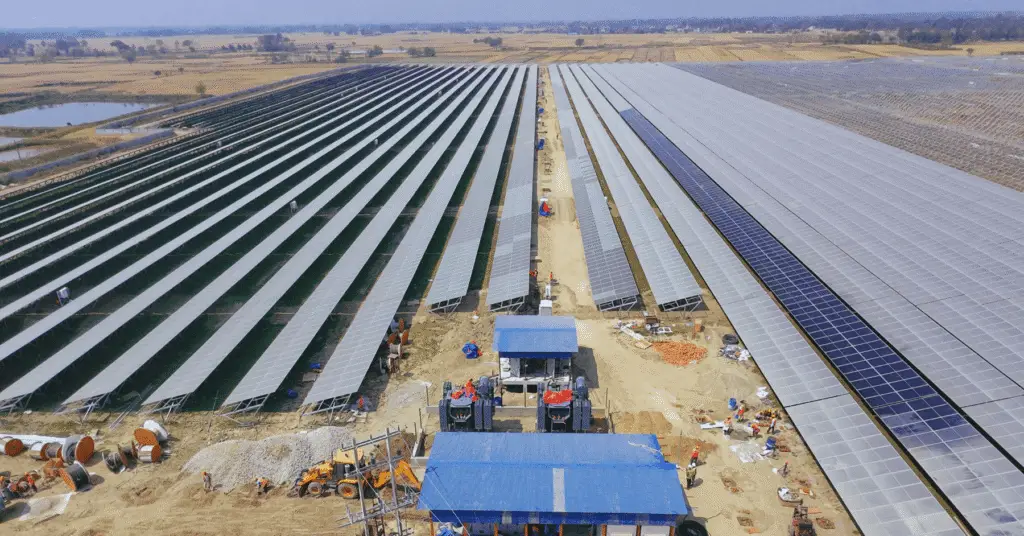
Dharamnagar Solar Farm Project – 2nd Phase (15MW)
The second phase of Dharamnagar Solar Farm Project is an extension of the Dharamnagar Solar Farm, located in the same area in Kapilvastu District, Lumbini Province, Nepal. The project was commissioned on May 26, 2025, with an installed capacity of 15 MW, producing approximately 30.2 GWh of renewable electricity per year. This second phase of the project will hopefully be registered on the Tracking Standard within the coming weeks.
The average annual issuance is expected to be 30,200 I-RECs.
Pashupati Renewables Ltd.
Pashupati Renewables Ltd. (PRL) is the developer of these two agro-photovoltaic solar projects. PRL – a renewable energy platform for development of solar and hydro power projects in Nepal – has a vision of sustainable, affordable, renewable energy development for growth of the country. PRL’s mission is to own and operate 500MW of renewable energy assets by 2030. Currently, it’s in the process of acquisition of operating solar and hydro assets and development of new greenfield projects.
Benefits of These Solar I-REC Projects
Support Nepal’s Efforts to Achieve Climate Goals
Together, the two solar projects contribute to Nepal’s national renewable energy targets by supplying a combined 50.3 GWh of renewable electricity annually, reducing the country’s reliance on imported fossil fuels and imported electricity, and supporting local decarbonization efforts.
These projects are expected to displace a significant quantity of CO₂ emissions every year and directly support the global transition to renewable energy sources.
Drive Nepal’s Renewable Energy Diversification
Although hydropower still provides more than 95% of Nepal’s electricity, government roadmaps and analysts warn that relying on a single river-based resource leaves the grid exposed to seasonal drought and climate shocks. National targets therefore call for raising solar, wind, and other non-hydro renewables to at least 5–10% of generation by 2030, and the Nepal Electricity Authority has already launched a 2.2 GW competitive-bidding programme for utility-scale solar to kick-start that shift.
The Dharamnagar Solar Projects directly contribute to this national goal by adding significant new solar capacity to the grid. Together, they help diversify Nepal’s electricity supply, strengthen energy security, and build resilience against climate shocks — marking an important step towards a cleaner and more balanced energy mix for the country’s future.
Empower Local Community Development
The projects contribute to social and economic development in the Kapilvastu District, Lumbini Province by creating local jobs during construction and operation and supporting ongoing community programs led by Pashupati Renewables Limited.
These projects align with multiple UN Sustainable Development Goals (SDGs), including SDG 7 “Clean Energy”, SDG 13 “Climate Action”, and SDG 8 “Decent Work and Economic Growth.”
Companies in Nepal Can Now Purchase Solar I-RECs!
The Dharamnagar Solar Farm Project is now generating solar electricity and the solar I-RECs are available for purchase. I-RECs enable companies with operations in Nepal to switch to using electricity from renewable sources, reduce Scope 2 emissions, and demonstrate credible climate action.
Eligibility for RE100 and SBTi: Commissioned in 2025, the project qualifies for use under carbon reporting initiatives like RE100 and SBTi.
A Large Volume of RECs: The total average annual issuance from the two projects is 50,300 I-RECs.
About RECs
A REC is evidence that a megawatt hour of electricity was generated from a renewable source and therefore did not create any Greenhouse Gas emissions. RECs are issued and purchased on the basis that one certificate represents the environmental attribute of one megawatt hour of renewable electricity.
These certificates are purchased and retired to reduce a company’s Scope 2 emissions. Outside of the EU and the US, the most common and reputable standard for RECs is the International Tracking Standard, which facilitates the issuance of International Renewable Energy Certificates (I-RECs).
Purchasing and redeeming I-RECs is a cost-effective way to reduce a company’s carbon footprint. For the owners of renewable energy projects, the revenue from selling I-RECs provides a reward for the environmental attributes of the power they generate. This incentivises the development of renewable energy power plants and supports the transition to clean, renewable national grids.
You can read more about RECs here, or use the contact form below to get in touch with us about I-RECs.


 WhatsApp
 Zalo
Zalo
